
The UK’s Spark Gap: Why Electricity Still Looks More Expensive Than Gas
As the UK pushes towards net zero, one issue continues to slow down the adoption of low-carbon heating technologies: the “spark gap”. This is the difference between the price of electricity and gas; it has become one of the biggest talking points in the transition away from fossil fuel heating.
For many building owners, facilities managers and businesses, the question is simple:
“If electricity is cleaner, why does it often cost more?”
The answer lies in the structure of the UK energy market and understanding the spark gap is essential when evaluating technologies such as heat pumps and geo-exchange systems.
The comparison with Sweden is useful because it shows that the spark gap is shaped by more than fuel cost alone. While both Great Britain and Sweden can trade through power exchanges such as Nord Pool, Sweden’s market is split into regional bidding areas, whereas Great Britain retains a single national wholesale electricity price. Alongside differences in taxation, policy costs and network charging, this helps explain why electricity and gas prices do not move in the same way across countries.
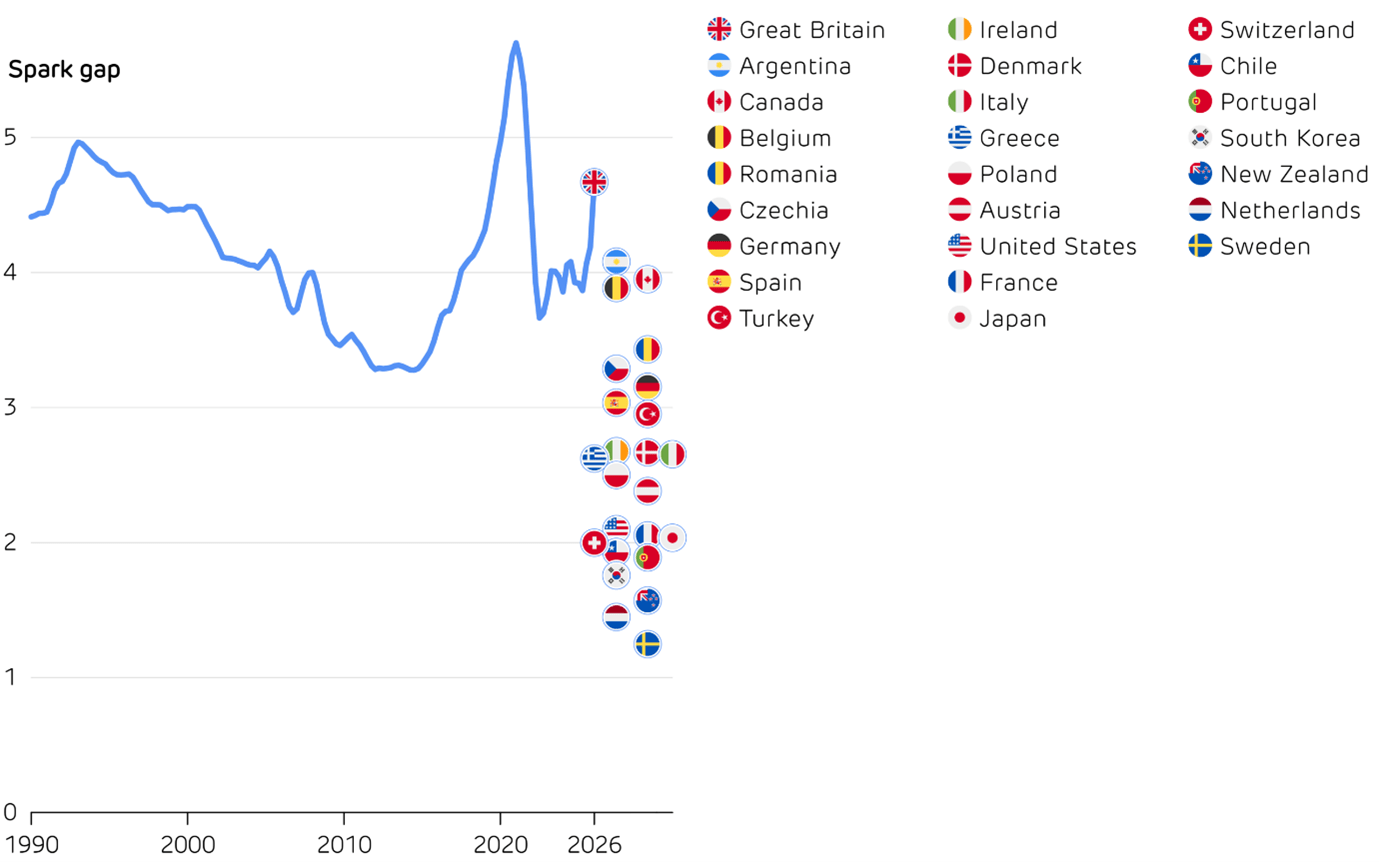
Figure 1: International comparison of the electricity-to-gas “spark gap”, showing Great Britain’s comparatively high ratio in 2026. Source: Drax Electric Insights Quarterly, Q4 2025, using data from Ofgem, DESNZ, Eurostat and IEA.
What is the Spark Gap?
The spark gap refers to the ratio between electricity prices and gas prices.
Historically in the UK, electricity has often cost around three to four times more per kWh than gas. While this fluctuates depending on wholesale markets and policy changes, the imbalance remains significant.
For example:
- Gas: ~6p per kWh
- Electricity: ~24p per kWh
This creates a ratio of roughly 4:1.
At first glance, this appears to make electrified heating systems far more expensive to run than gas boilers. However, this comparison ignores one critical factor:
Heat pumps do not create heat in the same way boilers do.
Efficiency Changes the Equation
A gas boiler burns fuel to generate heat. Even a highly efficient modern boiler is typically limited to efficiencies close to 90–98%.
Heat pumps operate differently. Instead of generating heat directly, they transfer existing energy from the air or ground into a building.
This means heat pumps can achieve a CoP (Coefficient of Performance) far above 1.
A CoP of 4 means:
- 1 kWh of electricity consumed
- 4 kWh of heating delivered
This fundamentally changes the economics of the spark gap.
Even if electricity costs four times more than gas, a heat pump operating at a CoP of 4 can theoretically deliver similar running costs while also significantly reducing emissions.
Using the earlier example:
- Electricity cost = 24p/kWh
- Heat pump CoP = 4
Effective heat cost:
24 ÷ 4 = 6p per kWh of delivered heat.
This means that although electricity may appear four times more expensive than gas at the meter, the delivered cost of heat can become much closer once heat pump efficiency is included.
This can be thought of as the Effective Heat Spark Gap: the difference between the cost of heat delivered by electricity-based heating and the cost of heat delivered by gas.
A more complete comparison also needs to account for boiler efficiency. For example, if gas costs 6p/kWh and a boiler operates at 85% efficiency, the useful heat cost is closer to:
6p ÷ 0.85 = 7.1p per kWh of delivered heat
On that basis, a heat pump operating at a seasonal CoP of 4 could be broadly comparable with, or even cheaper than, gas heating on a delivered-heat basis.
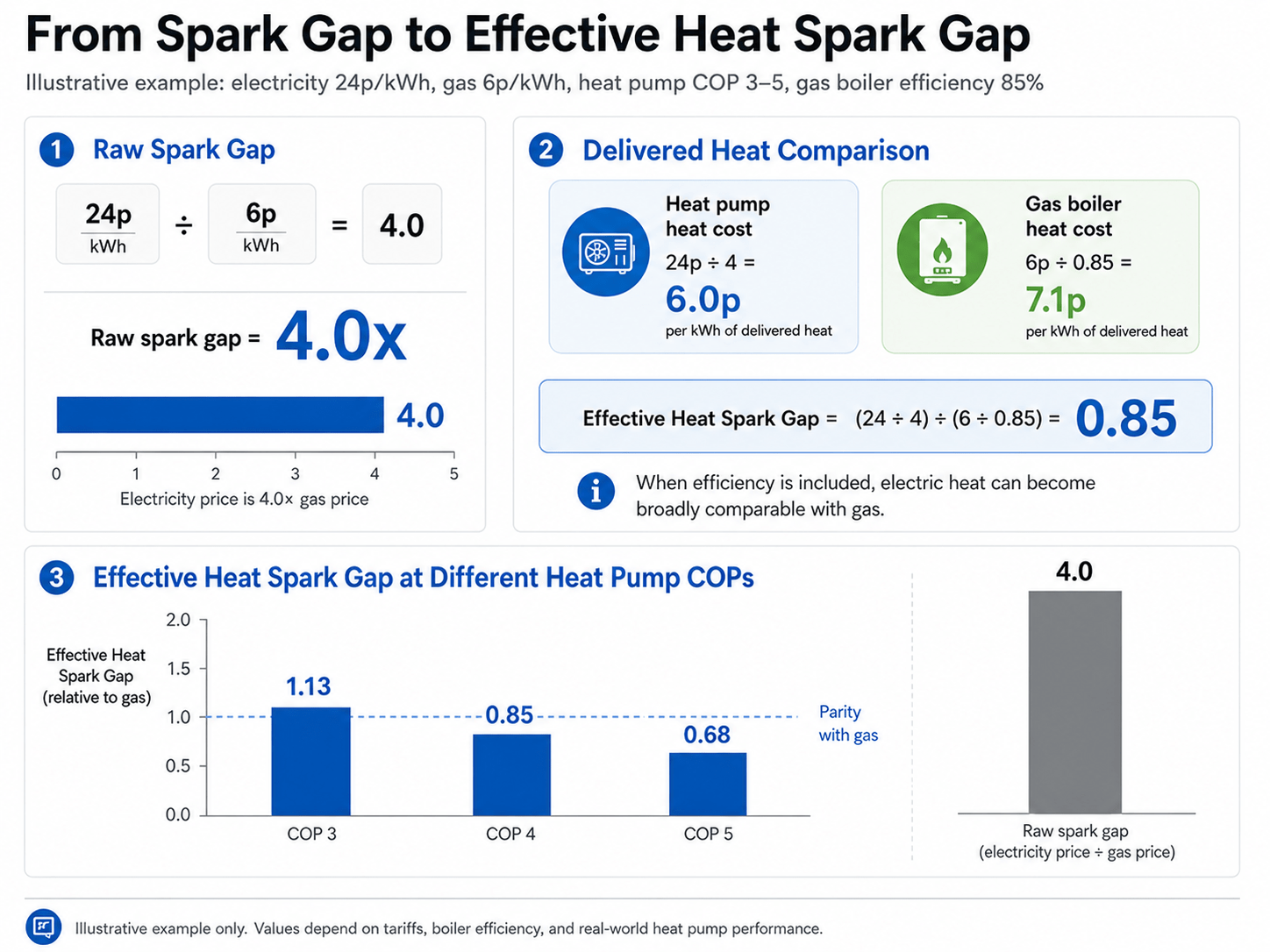
Figure 2: From raw spark gap to effective heat spark gap, showing how heat pump efficiency can make delivered electric heat broadly comparable with gas heat.
Why the Spark Gap Still Matters
Although efficiency helps offset the issue, the spark gap still creates several challenges.
Poorly Designed Systems:
Not all heat pump systems achieve high CoP values year-round. Oversized systems, poor controls, incorrect temperatures or badly designed emitters can reduce efficiency dramatically.
If a system only achieves a CoP of 2:
- 24p electricity ÷ 2 = 12p per kWh of heat
Suddenly the running costs appear far less attractive compared to gas.
This is one reason why system design, controls and aftercare are so important. The technology alone is not enough; operational optimisation determines whether a system performs economically.
Why Geo-Exchange Changes the Conversation
Ground source and geo-exchange systems help reduce the impact of the spark gap because they typically operate at higher and more stable efficiencies than air source systems.
Air source heat pumps become less efficient as outdoor temperatures fall. Geo-exchange systems instead utilise the more stable underground temperatures and in Erda’s case, stored energy within the ground itself.
This allows systems to maintain stronger CoP performance throughout the year.
Geo-exchange systems also create additional opportunities:
– Heat recovery from refrigeration
– Seasonal thermal storage
– Simultaneous heating and cooling
– Reduced peak electrical demand
– Lower operational volatility during cold weather
This is particularly important for buildings with year-round cooling demands such as:
– Universities
– Supermarkets
– Hospitals
– Data centres
These sites often reject large amounts of heat which can instead be stored and reused.
Cooling is an important part of this equation. A gas boiler can only provide heat; buildings that also need cooling usually require separate cooling equipment, such as chillers or air conditioning systems. Geo-exchange can support both heating and cooling through the same wider thermal system. In cooling mode, heat removed from the building can be transferred into the ground and, where conditions allow, reused later when heating is required.
This matters because cooling is becoming a more important design consideration in the UK. Heatwaves and high-temperature events are becoming more frequent, longer-lasting and intense, while the Climate Change Committee has warned that hotter heatwaves could cause overheating risks across much of the existing building stock. As cooling demand grows, systems that can provide low-carbon heating and efficient cooling will become increasingly valuable.
The Policy Debate Around the Spark Gap
One of the major criticisms of the UK energy market is that environmental levies and policy costs are disproportionately added onto electricity bills rather than gas.
This creates a policy tension. If the UK wants homes and businesses to move from fossil-fuel heating to low-carbon electric heating, electricity needs to become more financially attractive. However, simply shifting costs from electricity bills onto gas bills is not a complete answer. Many households and businesses still depend on gas because they do not yet have a practical or affordable alternative.
Many industry groups argue that reducing electricity levies, or funding policy costs in a more balanced way, would accelerate decarbonisation by improving the economics of heat pumps.
Several organisations, including the UK government’s own advisory bodies, have identified the spark gap as a barrier to electrification.
This matters because the UK’s net zero strategy relies heavily on replacing fossil fuel heating with electric alternatives.
Without reform, businesses may delay investment due to concerns around operational costs.
There is also growing recognition within the industry that the UK electricity market structure may not reflect the long-term direction of energy generation. Currently, electricity prices are still heavily influenced by gas pricing despite the rapid growth of renewable generation.
In many other countries with high renewable penetration, electricity pricing is less directly tied to gas markets, helping improve the economics of electrified heating systems.
This has led to increasing optimism across the sector that future market reforms could help narrow the spark gap further, making technologies such as ground source and geo-exchange systems even more commercially attractive over time.
Why Long-Term Thinking Matters
The spark gap often dominates short-term discussions but long-term trends tell a different story.
The UK grid continues to decarbonise rapidly, with renewable electricity becoming a larger proportion of generation every year. Gas, by comparison, remains exposed to global commodity pricing and geopolitical instability.
At the same time, heat pump technology and control systems continue to improve.
This means the real-world economics of electrified heating are likely to improve over time, particularly for systems that:
– Store energy
– Recover waste heat
– Optimise operation dynamically
– Avoid oversizing
– Operate at lower flow temperatures
For many organisations, the challenge is not simply whether low-carbon systems work, but whether the financial benefits justify the investment timeline.
Historically, businesses have often prioritised short-term operational costs over long-term resilience. However, rising carbon pressures, Environmental, Social, and Governance (ESG) requirements, volatile gas markets and evolving legislation are beginning to shift that conversation.
Increasingly, organisations are recognising that investing in efficient electrified systems is not only about reducing emissions but also about improving long-term energy stability, reducing exposure to fossil fuel volatility and future-proofing assets against tightening regulation.
This is where geo-exchange systems become especially valuable.
Rather than viewing heating as a simple “fuel burning” exercise, geo-exchange treats buildings and the ground itself as part of a wider thermal ecosystem.
The Future of the Spark Gap
The spark gap is not just an energy pricing issue; it is a transition challenge.
As the UK moves towards electrification, the relationship between gas and electricity pricing will become increasingly important. Businesses investing in heating infrastructure today need systems that are resilient not only technically but economically.
The key takeaway is this: the spark gap alone does not determine whether electrified heating is viable.
What matters is the cost of useful heat delivered. System efficiency, thermal storage, controls, building demand profiles and operational strategy all play a major role. A poorly designed electrified system may struggle against gas but a well-designed heat pump or geo-exchange system can already compete on running costs while delivering substantial carbon reductions.
For building owners, this changes the question.
It is no longer simply:
“Is electricity more expensive than gas?”
It is:
“How do we design the most efficient low-carbon heat system for this building?”
That is where geo-exchange becomes especially important. By using the ground as a thermal store, geo-exchange systems can improve heat pump performance, reduce exposure to volatile fuel prices and create a more stable long-term route to decarbonisation.
As policy evolves and the electricity grid continues to decarbonise, the economics of efficient electrified heat are likely to become stronger. The organisations that act early will be best placed to reduce carbon, manage future energy risk and avoid locking themselves into fossil-fuel heating infrastructure.
If you are reviewing your heating strategy, the starting point should not be the headline spark gap alone. It should be a proper assessment of your building’s heat demand, system efficiency and the potential for geo-exchange to reduce both carbon and long-term operating cost.